Microbial ecology · bioinformatics · Norwich, UK
The world’s most diverse life is often invisible.
We study how microbial strains persist, disperse and interact, using metagenomic data from the human gut and environmental systems. We also develop software for reproducible microbiome analysis.
Our approach
Microbes shape every ecosystem. We develop the methods to resolve their diversity, track their evolution and reveal how communities change.
See our research approachWhat we do
Questions at the scale of communities, strains and genomes.
We combine computational methods with a patient- and ecosystem-centred perspective to turn complex sequencing data into useful biological insight.
01
Microbial diversity
We catalogue bacterial, archaeal, fungal and other eukaryotic diversity that standard reference sets or protocols can miss.
- Metagenome-assembled genomes
- Archaeal and microeukaryotic diversity
- Gene and taxonomy catalogues
02
Microbial evolution
We examine how microbial populations persist, disperse and exchange genes across hosts and environments.
- Strain-resolved profiling
- Pangenomes and mobile elements
- DNA methylation and phenotypic variation
03
Microbial communities
We identify recurring community structure and test its associations with diet, disease and environmental change.
- Numerical ecology
- Unsupervised community signatures
- Study design and technical controls
Curiosity, candour and shared momentum.
We care about ambitious science, honest communication, sustainable ways of working and the career development of every member of the team.
A collaborative team working across microbial ecology, genomics and computation.
Open software
Methods for microbiome data.
Our bioinformatic tools are freely available to help others investigate microbial communities with confidence and at scale. They include pipelines for amplicon processing, shotgun metagenomics, taxonomic profiling and statistical analysis.
Explore all lab toolsKnowledge shared
Research highlights
The publication archive presents work led or jointly led by members of the group. Falk Hildebrand’s Google Scholar profile provides the complete publication record.
- 2025Duncan et al. Detecting signatures underlying the composition of biological data. Nucleic Acids Research. ↗
- 2023Frioux et al. Enterosignatures define common bacterial guilds in the human gut microbiome. Cell Host & Microbe. ↗
- 2022Özkurt et al. LotuS2: an ultrafast and highly accurate tool for amplicon sequencing analysis. Microbiome. ↗
- 2021Hildebrand et al. Dispersal strategies shape persistence and evolution of human gut bacteria. Cell Host & Microbe. ↗
Bring your questions, let’s build what’s next.
Prospective researchers, students, visiting scientists and collaborators are welcome to contact the group with a concise account of the proposed work.
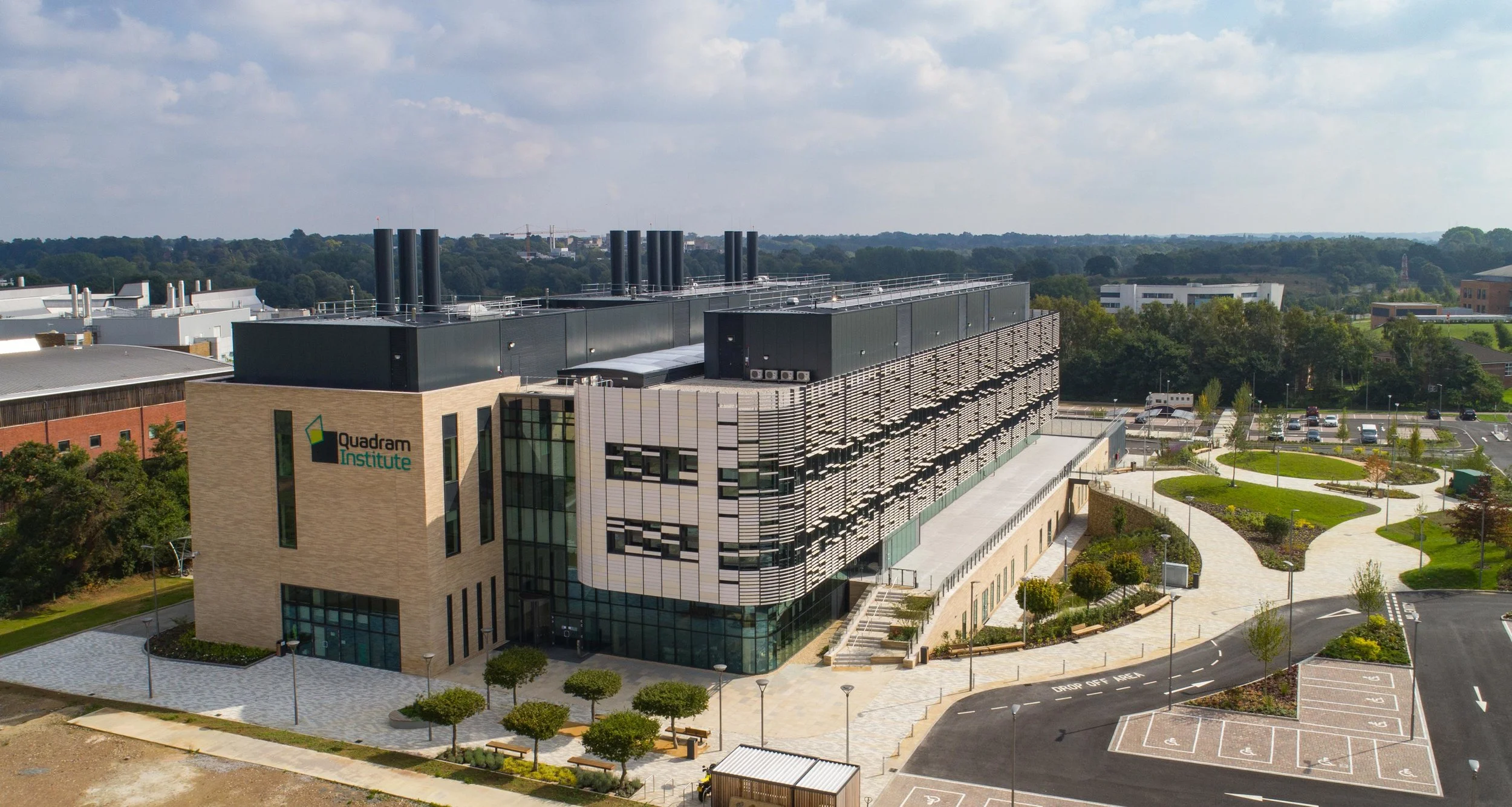
Current roles are posted by Quadram Institute and Earlham Institute. We also welcome enquiries about internships and visiting research stays of three months or longer.